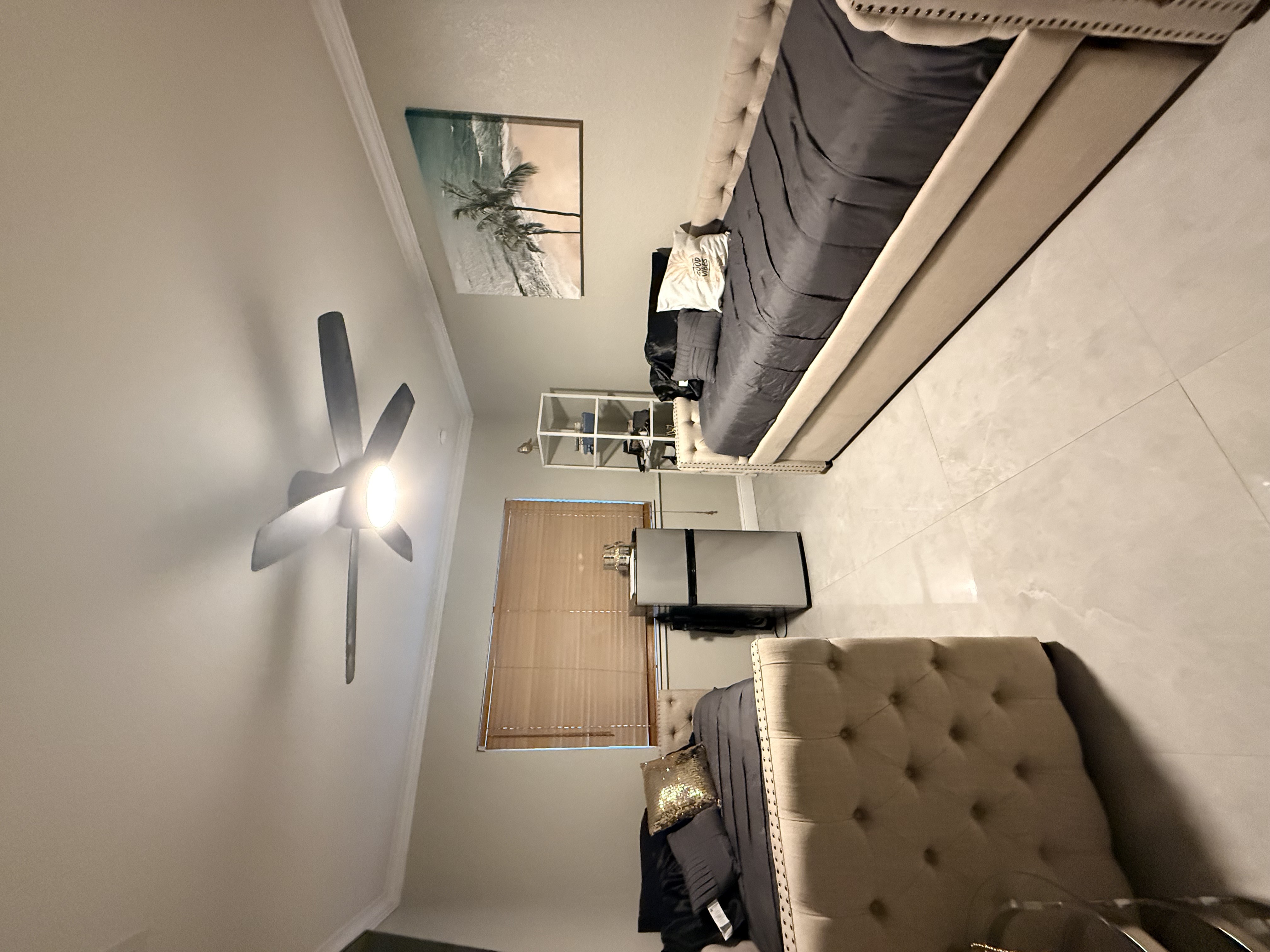
Tummy Tuck Recovery
Abdominoplasty is one of the most demanding cosmetic recoveries you can take on. Our protocol is built around drain management, the bent-waist posture, and the patient work of rebuilding core mobility.
Understanding Abdominoplasty, honestly.
A tummy tuck, or abdominoplasty, removes excess skin and fat from the abdomen and — in full and extended tuck procedures — repairs separated abdominal muscles (diastasis recti) with permanent sutures. Many surgeons also include muscle plication, umbilical reconstruction, and targeted liposuction of the flanks.
Because the procedure involves internal muscle repair and a long abdominal incision, early recovery asks you to walk slightly bent at the waist, sleep with your knees elevated, and protect the repair from any forward stretching for several weeks. Done well, the recovery is deliberate and forgiving; done poorly, it opens the door to complications that affect the final result.
Your Abdominoplasty timeline
A realistic, phase-by-phase map of what the first six months tend to look like. Every recovery is individual, but the rhythms below are consistent enough to plan around.
Bent-waist and drain care
You will walk hunched forward and move slowly from bed to chair to bathroom. One to two drains are usually in place. Pain is most noticeable in the abdomen and lower back, which is compensating for your posture. Our team handles drain emptying, output measurement, and binder adjustment on schedule.
Phase 1 of 5
How we run your recovery
Not a list of amenities — a sequence of clinical and hospitality decisions we make on your behalf, every day, until we hand you off cleanly.
Pre-arrival coordination
We review your operative report and discharge orders with your surgical coordinator before arrival. Drain type, suture details, binder size, and follow-up schedule are logged so nothing is missed in handoff.
Drain management
Each drain is stripped, emptied, and logged on a set schedule. We track output, color, and odor and flag any changes immediately. A daily log goes back to your surgeon so removal can be timed accurately.
Bent-waist positioning and sleep setup
Your bed is pre-configured with a wedge and knee pillow to keep the repair slack. We cue safe movement patterns — the 'log roll' out of bed, the supported chair pivot — so no one accidentally stretches the muscle plication.
Lymphatic drainage cadence
Sessions begin around day 5 to 7 depending on your surgeon's orders. We work around the incision, not across it, and focus on the flanks, pubic region, and lower back where fluid tends to pool.
Binder, compression, and skin care
Your abdominal binder is adjusted daily for fit, checked for skin folds or pressure points, and paired with any surgeon-specified foam inserts. We rotate between binder and compression garment as indicated.
Scar therapy education
Before you leave us, we set you up with a written scar care plan — silicone sheets or gel, sun protection, and timing — so the work you have already invested in continues after you travel home.
The short list of things that can't wait until morning.
We want you informed, not alarmed. If any of the following happen during your stay, tell a staff member immediately — we will loop in your surgeon. If you are already home and see any of these, call your surgeon the same day or, where noted, call 911 first.
(305) 833-4151Fever above 101 F (38.3 C)
Possible infection. Contact your surgeon the same day, especially if paired with increasing incision redness or pain.
Shortness of breath, chest pain, or racing heart
Possible pulmonary embolism. Abdominoplasty carries a real clot risk. Call 911 first, then your surgeon.
Calf pain, warmth, or one-sided leg swelling
Possible deep vein thrombosis. Do not massage the leg. Seek urgent evaluation.
Incision separation, gapping, or exposed suture
Small separations can sometimes be managed conservatively, but any opening warrants a same-day surgeon call.
Foul drainage, green or yellow pus
Clear or pinkish drainage from a fresh drain site can be normal. Foul-smelling or pus-like output is not.
Sudden, dramatic increase in abdominal swelling
May indicate a seroma or hematoma. Contact your surgeon within hours for evaluation and possible aspiration.
Skin that turns dark purple or black along the incision
Sign of possible skin compromise. Requires same-day surgeon attention to preserve tissue.
Most-booked for Abdominoplasty
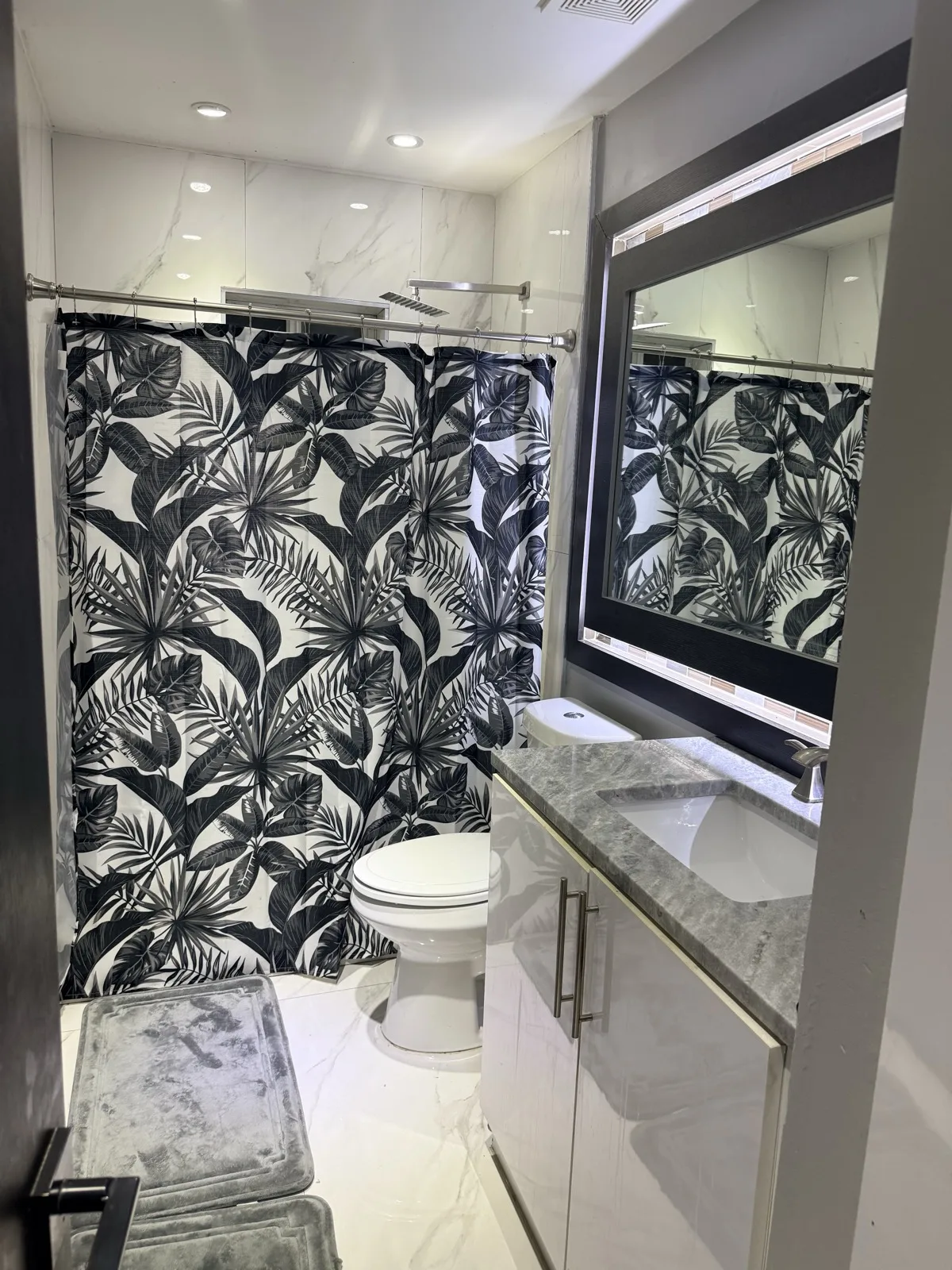
Seven nights in a private suite covers drain management, the first lymphatic sessions, and the transition back to upright posture — the three phases where most tummy tuck complications are caught early.
7 nights, everything handled.
- 24/7 post-op monitoring and medication management
- Chef-prepared recovery meals and hydration protocol
- Round-trip airport transportation
- Surgeon appointment transport
- Daily garment and compression management
- Surgical coordinator communication
Investment
$4,645 with lymphatic drainage massage included.
Check-in 3:00 PM
Check-out 11:00 AM
Abdominoplasty — questions, answered.
Other recovery guides
Each protocol is tailored to the procedure — not a one-size-fits-all checklist.
6 to 8 week full protocol
Brazilian Butt Lift Recovery
A Brazilian Butt Lift combines liposuction of the abdomen, flanks, and back with the careful re-injection of your own purified fat into the gluteal region.
4 to 6 week full protocol
Liposuction 360 Recovery
Liposuction 360, or lipo 360, is circumferential liposuction of the mid-section — abdomen, flanks, and back — usually in the same surgical session.
8 to 10 week full protocol
Mommy Makeover Recovery
A Mommy Makeover is a combination procedure, customized to each patient.
Ready when you are.
Most Abdominoplasty patients book four to eight weeks before surgery. We will walk you through the package fit, the travel plan, and the clinical details on a single call.